
April 20, 2026
Jen
Author of the SlowCozyProductivity community
TL;DR: 3 simple self-reflection practices: brain dumping, analyzing the day through three categories, and self-inquiry.
Hi, I'm Jen. I only write about topics that interest me personally to ensure the content is sincere.
I adhere to the principle of slow and cozy productivity, so I write about methods that help achieve it.
Self-reflection is one of the tools that helps me maintain a relaxed pace of work without losing productivity.
Here are the self-reflection methods I use. I focus on simple techniques so you don't get stuck in over-analyzing.
Examples of why self-reflection is useful:
- Identifies recurring behavioral patterns
- Points out cognitive biases
- Teaches you to choose your emotions
- Returns you to your true goals
I use 3 methods for self-reflection.
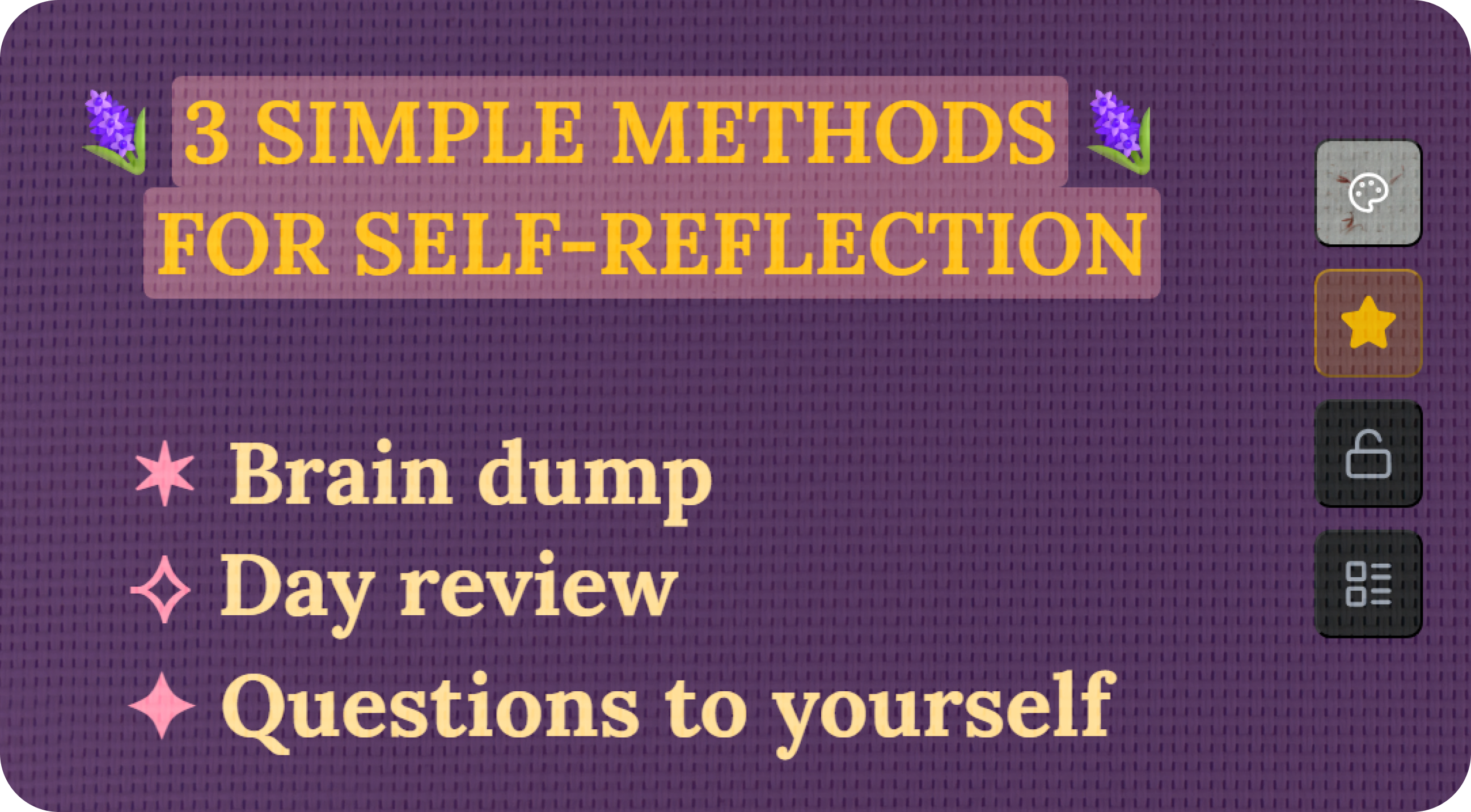
- Brain dump — stream-of-consciousness writing that doesn't limit your thoughts.
- Day analysis — tracking where time went and what gave or drained energy.
- Self-inquiry — asking yourself the right questions.
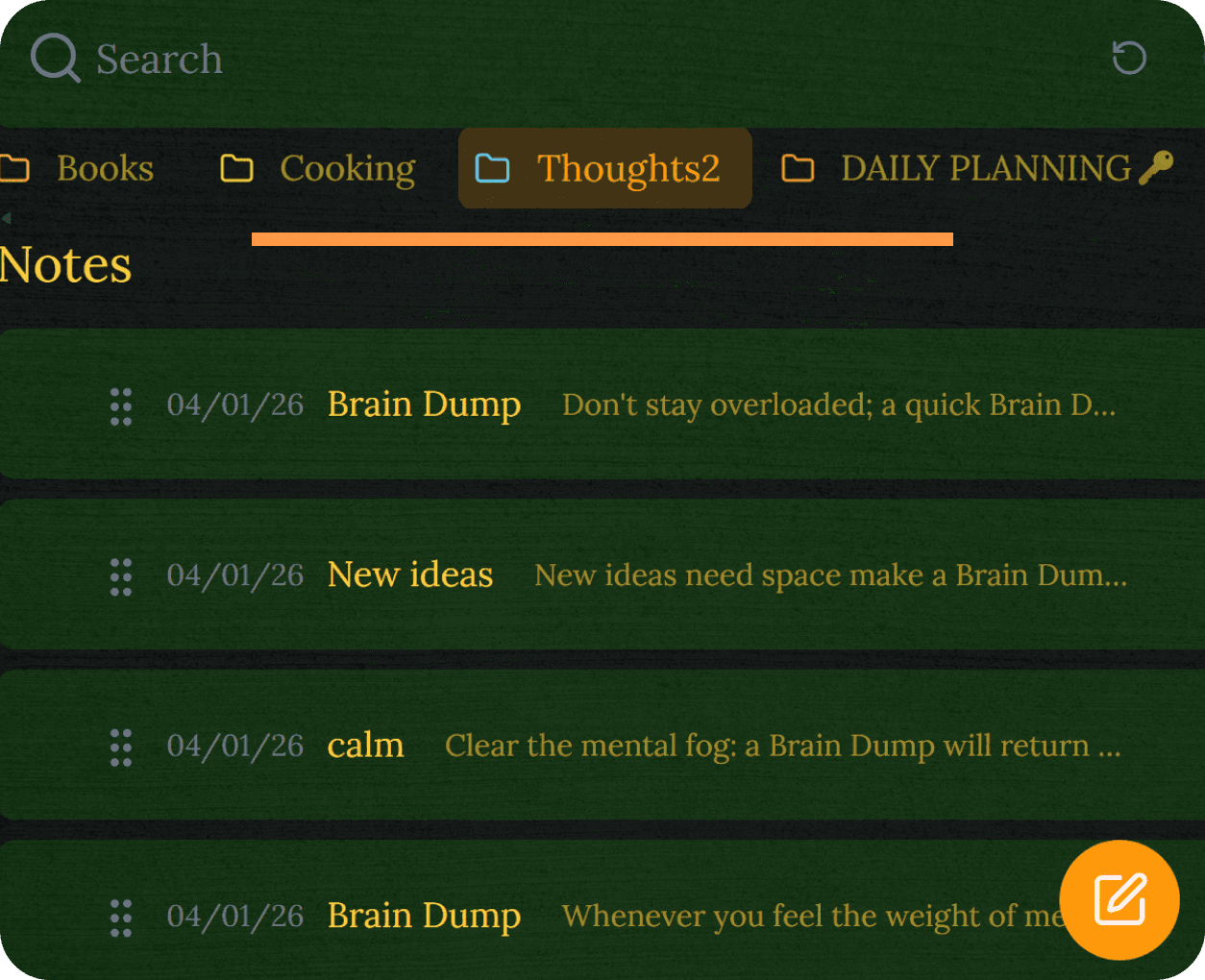
1. Brain dump
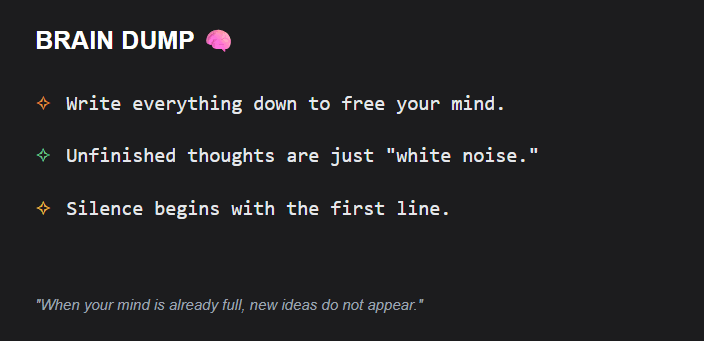
A brain dump is simply recording all accumulated thoughts in a free-form manner, without structure.
The difference from regular journaling is the speed: you need to offload the weight of your thoughts quickly and ignore how they are formatted.
Brain dumping aids self-reflection by removing mental chaos, allowing you to think more calmly and mindfully.
Situations where I use a brain dump:
- I can't start a task and feel procrastination kicking in
- I have many ideas but no clear priorities
- Accumulated emotions are preventing clear thinking
- I'm losing focus and feeling scattered
I've noticed that when I simply write down my thoughts, two things happen. First, if there are questions hidden in the mess, answers usually appear almost immediately. Second, insights emerge: ideas on how to resolve a situation and why it arose in the first place.
I don't use brain dumping every day—only when I feel the need. For me, it's a vital but non-daily practice. For my daily routine, I do the following ⫸
2. Day analysis
Analyzing the day helps me understand myself better. I found a way to easily view the lived day as a whole.
I don't like planning my day: I often fail to complete what was planned, leading to feelings of pressure and deadlines.
It feels like a pre-determined fate—when everything is strictly set. It's not a pleasant feeling; it feels like a lack of freedom.
Therefore, instead of planning, I record facts before bed. I simply write down what has already been done and group it into three categories. The number of tasks doesn't matter; what matters is having at least one action in each category.
I divide tasks into these three categories:
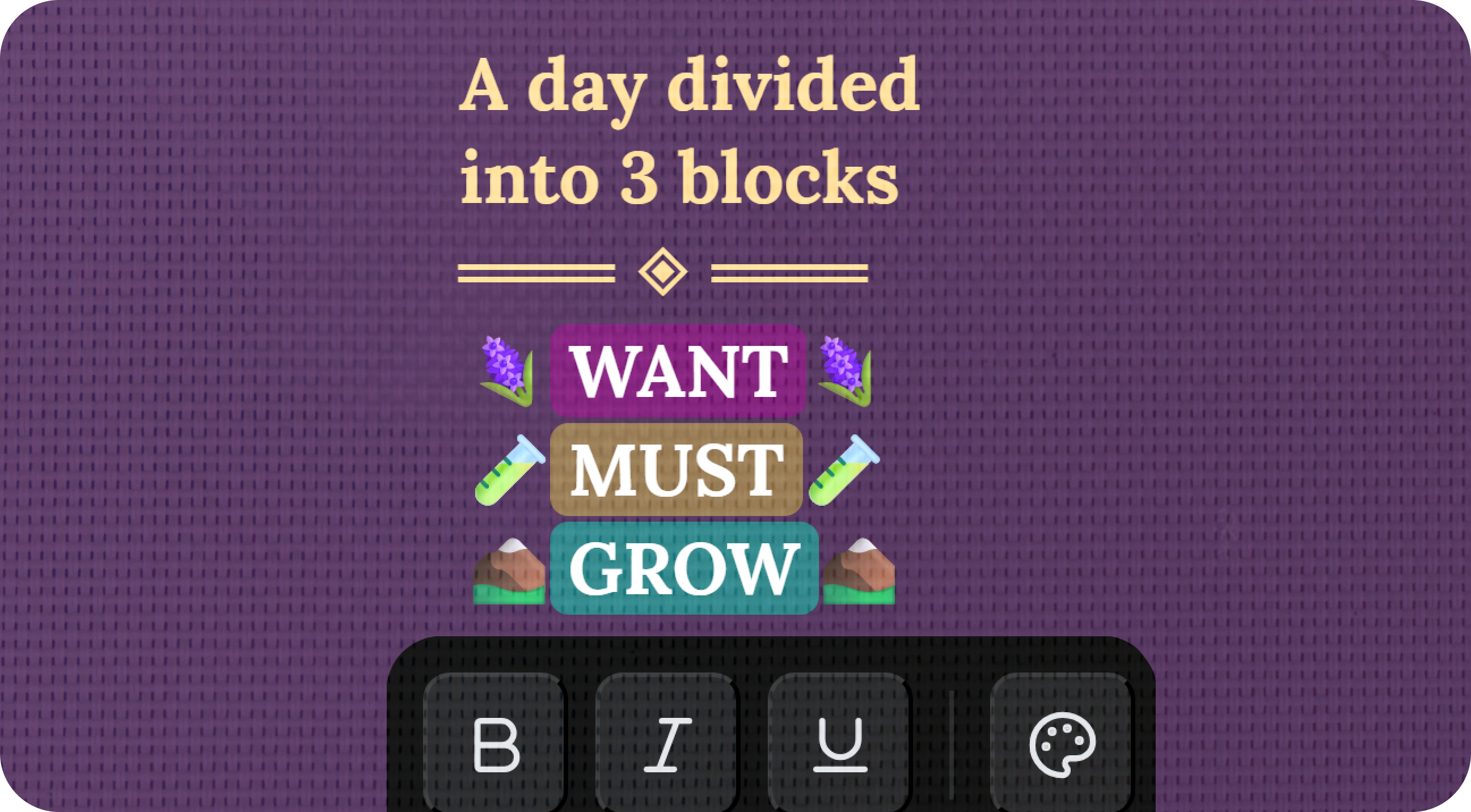
Must (result)
Tasks that others depend on, or those with a deadline that yield a measurable result.
Want (resource)
Everything that restores energy and supports your state. There are no deadlines or measurable results here, making them pleasant to perform.
Grow (growth)
Learning, reading, reflecting, or deep conversations. Everything that provides depth and a sense of development.
To reiterate: the quantity of tasks isn't important. What matters is that each category is represented. Such a day feels holistic and meaningful to me.
If I don't complete at least one thing from each category, I'll be honest—I don't feel great afterward.
I wrote more about living the day through these three categories in the article Daily Planning: How to Build a Sustainable Daily Log for Stress-Free Productivity.
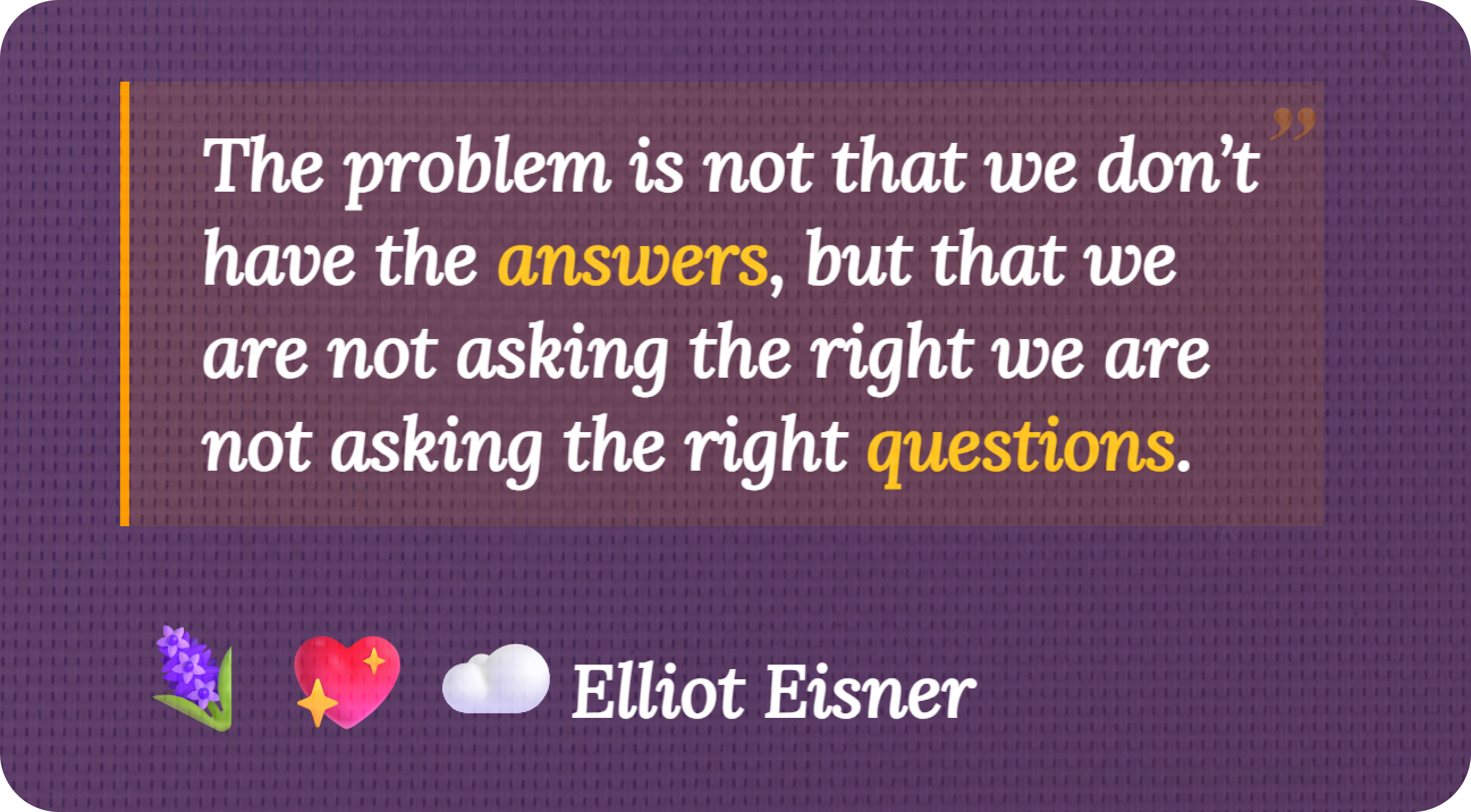
3. The simplest way to self-reflect is to ask yourself open-ended and leading questions
Open-ended questions ⫸ questions that cannot be answered with a simple "yes" or "no." They require a detailed response.
Leading questions ⫸ questions that deepen your reflection.
I'll provide a list of such questions. You can choose a couple you like and ask them before bed or in the morning before picking up your phone.
List of questions for self-reflection:
- What do I need to let go of?
- Which thoughts are repeating?
- What is causing anxiety?
- What am I doing out of habit, even though it no longer brings joy?
- If I had more courage, what would I change right now?
- What am I staying silent about, even though I really want to speak up?
- In which area of life am I currently moving on autopilot?
- Who inspired me today, and how?
- What can I do to make tomorrow more cozy and calm?
- What can I thank myself for?
Source I studied before writing this article. LCSW-approved article: BetterHelp — brain dump journaling
Recent articles
Comments
Public discussion — submissions are moderated before they appear below.
Discussion
Loading comments…