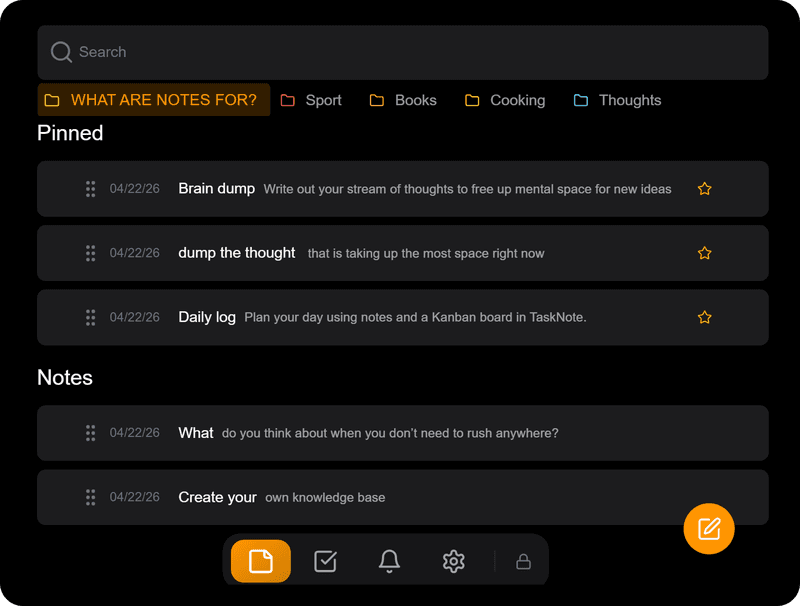

TL;DR: If notes become too many, important things get lost. Solution: folders for structure, pins for priority, merging notes instead of splitting, emojis for quick navigation, and search by words instead of hashtags.
Have you ever had this, when you want to start taking notes to take control of your life, time, and tasks, or to do some self-analysis, but after some time, usually a short one, you drop it?
I want to share my thoughts on this.
Since an early age, I have been taking notes. It all started with paper diaries where I described my dreams and goals. Then in my teenage years I started describing my day to share on paper what was happening to me. Now I keep digital notes that help me manage my time, energy, motivation, goals, and household and work tasks.
The first problem I faced when I wanted to take notes more consciously and regularly was that I forgot to return to important notes.
I created notes with motivating thoughts, useful life hacks, and shared with myself what works for me. But after about a month I kept finding these forgotten notes with surprise and could not understand how I forgot about them if they contained such important information.
I started analyzing why this happens. The reason is simple. Over time, too many notes accumulate, and it is not surprising that important things get lost.
That is why my main principle of note-taking is to get rid of the growing chaos in them.
I started distributing notes into thematic folders so that each category of knowledge is stored in its own section.
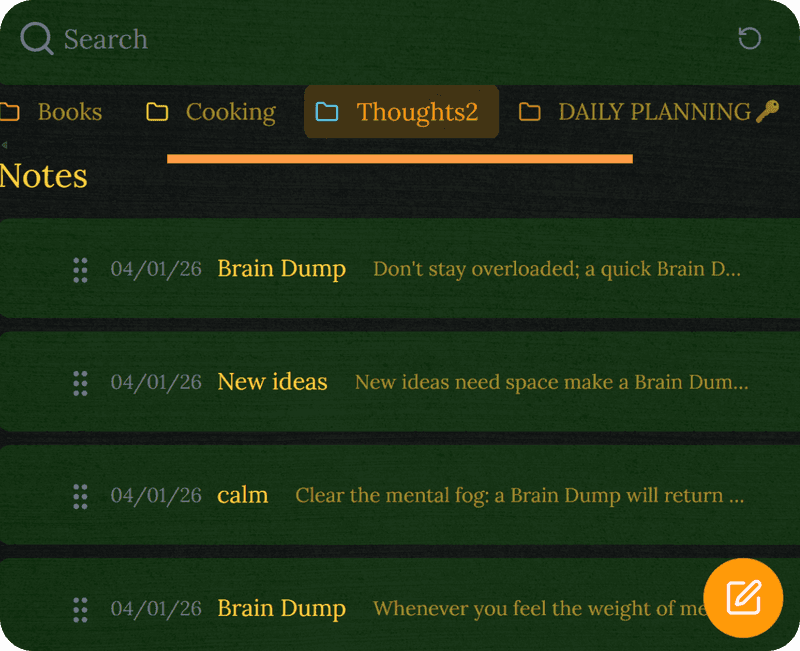
But this did not fully solve the chaos problem: notes kept increasing, and I still forgot about important entries.
What helped me:
I added important notes to pinned (I clicked the star and it got pinned as shown below). Now notes with a star were always at the top.
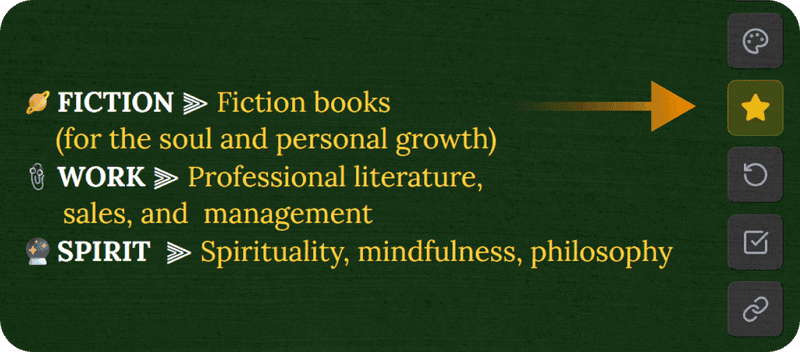
I also try not to split information, but to add to existing notes. Once a week I do a quick review: I merge similar entries so as not to lose context and to see the full picture in one note.
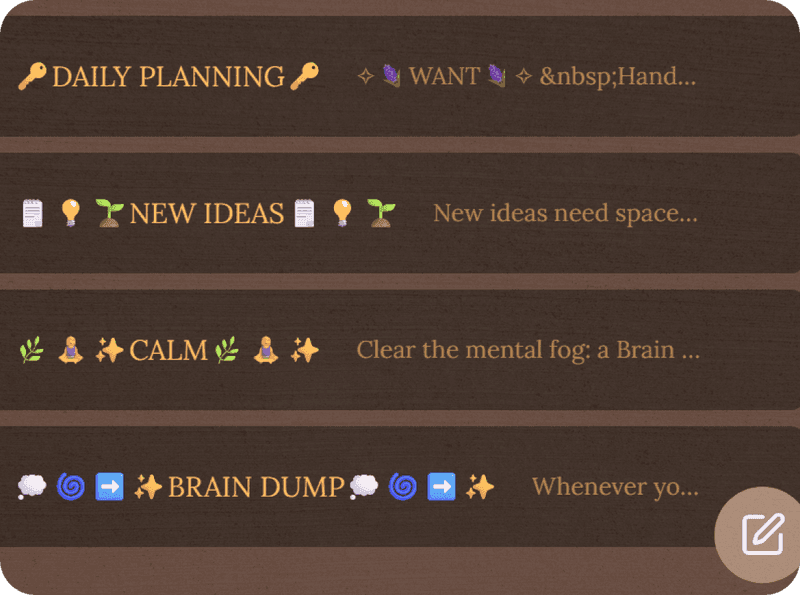
I also give important notes visual markers using emojis so that without reading deeply I can easily identify them.
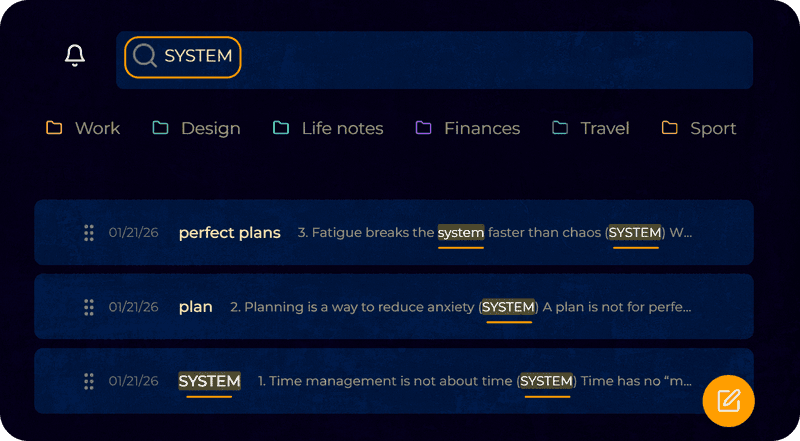
Search in digital notes
My personal opinion is that searching by hashtags is unnecessary if you have folders. Of course, this is a popular method of organization and it works for many people, but for my tasks this system turned out to be overly complicated.
Folders themselves group information by topics, so a keyword in search will give results in the right context.
I do not like to spend time entering tags or remembering them, I prefer search by keyword or a phrase in the text that I already wrote.
Summary. My main principles of note-taking.
🗂️ Thematic separation.
Grouping notes into folders.
⭐ Prioritization (Pins).
Using a star for important thoughts so they always stay at the top and do not get lost.
📦 Consolidation.
Merging similar information into one note instead of creating many small and scattered entries.
👁️🗨️ Visual coding.
Using emojis in titles as quick markers for finding without reading.
🚧 No hashtags.
Priority is given to full-text search by words and phrases. This removes extra work of creating and remembering tags, since folders already provide the needed accuracy.
You don't necessarily have to follow all these principles; choose the ones that work best for you. I've written about three more principles of note-taking in this article.
Recent articles
Comments
Public discussion. Submissions are moderated before they appear.
Loading comments…