My name is Jen, and I practice ways that help people work at a comfortable pace rather than chasing speed. I stand for depth, meaning, and mindfulness. Understanding how to improve EQ (emotional intelligence) is essential in my work because I interact with people every day. Even though I connect with them online via video calls, the communication feels very real and alive.
"I often found myself in situations where, after a video meeting ended, I would think, 'I should have reacted differently.'"
When I dug into Daniel Goleman's EQ model, it became clear why this happens, and more importantly, how to improve EQ in concrete, practical ways.
Goleman's theory includes five components:
- Self-awareness
- Self-regulation
- Empathy
- Effective communication (social skills)
- Motivation
"If you're left with the feeling that you could have answered better after a conversation, it means one of these skills didn't kick in at the right moment."
In practice, it looked like this for me:
Empathy.
I didn't always notice the micro-expressions of my interlocutors, even though they carry a lot of information. Sometimes a person says "everything is okay," but their face shows they expected something else. If you catch this signal, you can clarify and meet their expectations more accurately. This is one of the fastest ways to improve emotional intelligence in real conversations.
Here is an example of a situation where I managed to read a client's micro-expression, which helped keep the conversation going.

Self-awareness and Self-regulation.
The feeling that I should have said or done something differently often arose from a lack of self-awareness and self-regulation. These two components are the foundation of how to improve EQ, without them, the other skills don't have solid ground to stand on.
Self-awareness helps you notice irritation, understand its cause, and consequently influence your behavior.
Self-regulation helps in the moment when you've already caught your emotion, to change your reaction: stop, level your tone, and steer the conversation back in the right direction.
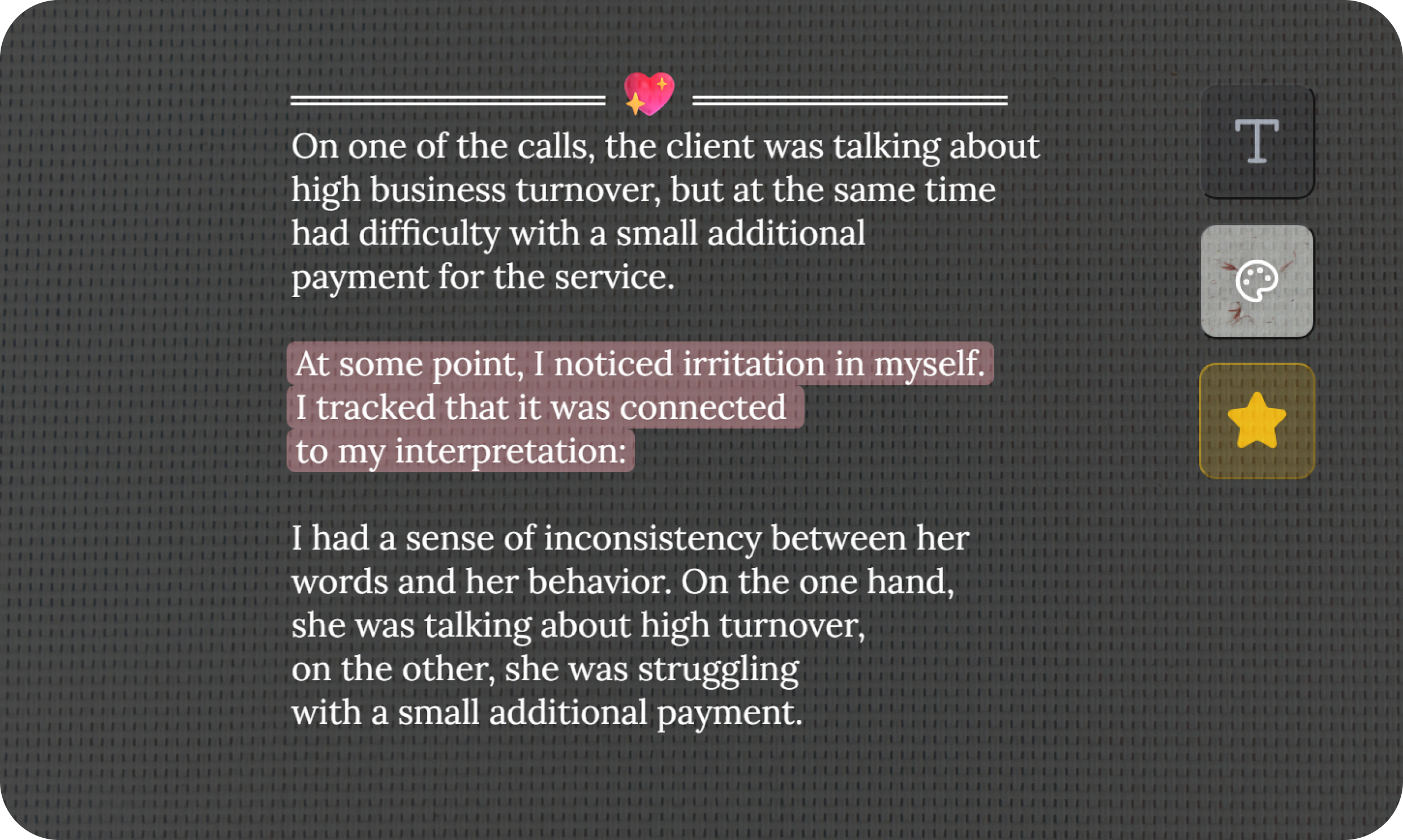
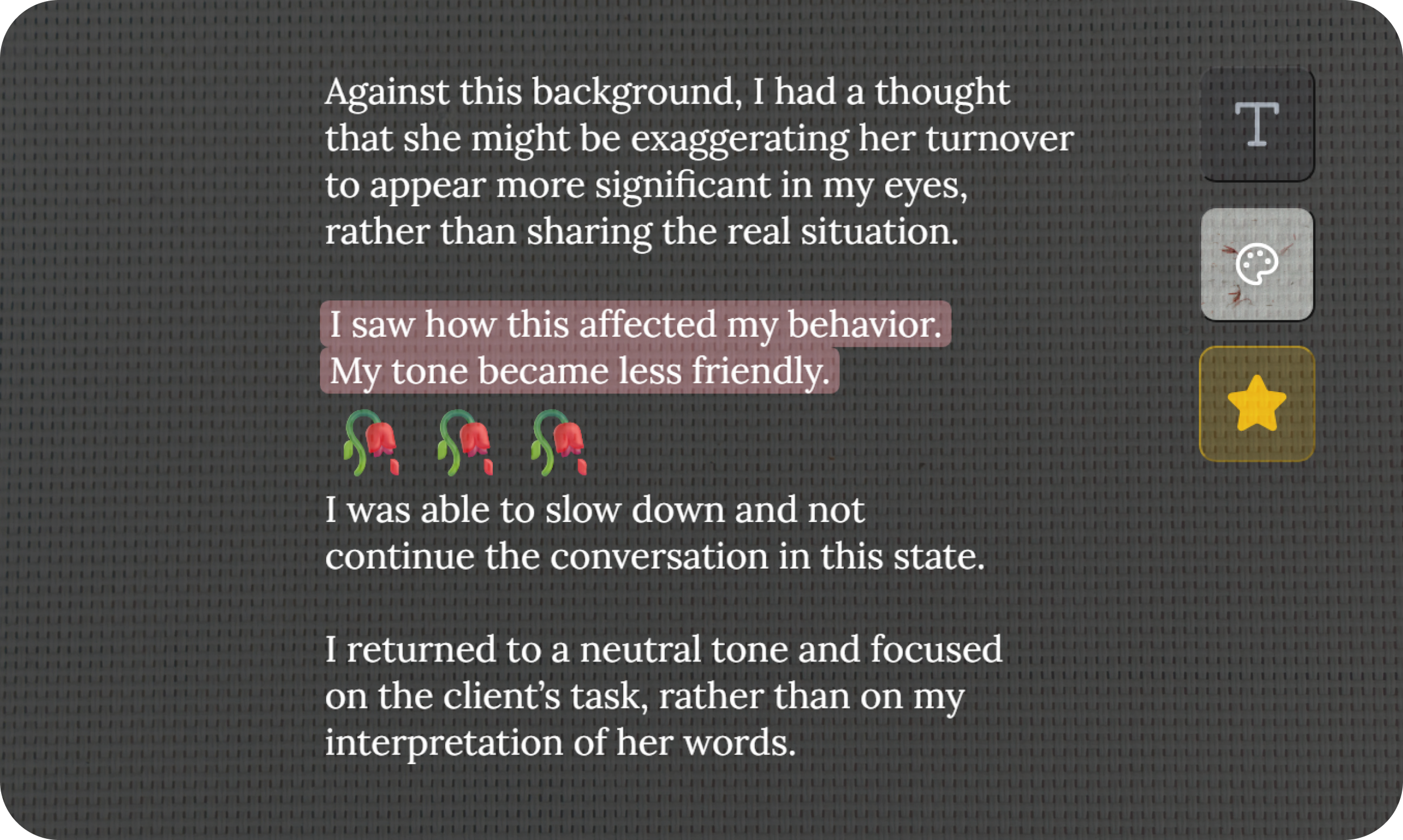
Here is an example where I managed to track an emotion and regulate it.
Effective Communication (or Social Skills).
This includes many aspects. For now, I've highlighted one for myself: the skill of managing the atmosphere of a dialogue through your own state and delivery.
Clients often come to me in different states: irritated, tired, confused, sad, or just lacking energy.
It's important to me that after talking with me, they not only receive expert information but also level out emotionally. I don't have much energy to give away, but I can transmit a calm state.
"It's vital to bring the client to a more comfortable and calm state first, and only then move on to agreements."
%20at%20work..png)
%20at%20work.2.png)
%20at%20work.3.png)
Motivation.
According to Goleman, people with high emotional intelligence are driven by internal factors rather than external ones (money, status, praise). When I found my internal motivation at work, two qualities emerged that directly show how to improve EQ in daily interactions:
Resistance to manipulation. Thanks to internal motivation, I began to treat any negotiation as a deep practice. I don't follow a strictly set pattern; instead, I develop mindfulness. This helps me notice tricks and manipulations from colleagues or clients more often.
For example, a client once cited past experience with another company, saying they were twice as cheap while promising the same results. But I knew this was practically impossible from my competitive price analysis. I recognized the manipulation: it was a made-up story to pressure me into lowering our price.
Cognitive flexibility. Another benefit I gained through internal motivation. It often pushes me to look for unconventional solutions because there's a sincere interest and internal drive.
For example, if a client says, "I don't want to spend such a large amount on services," I might suggest looking at it differently: "Let's try to see this not as a cost, but as an investment in yourself."
What helps to improve EQ?
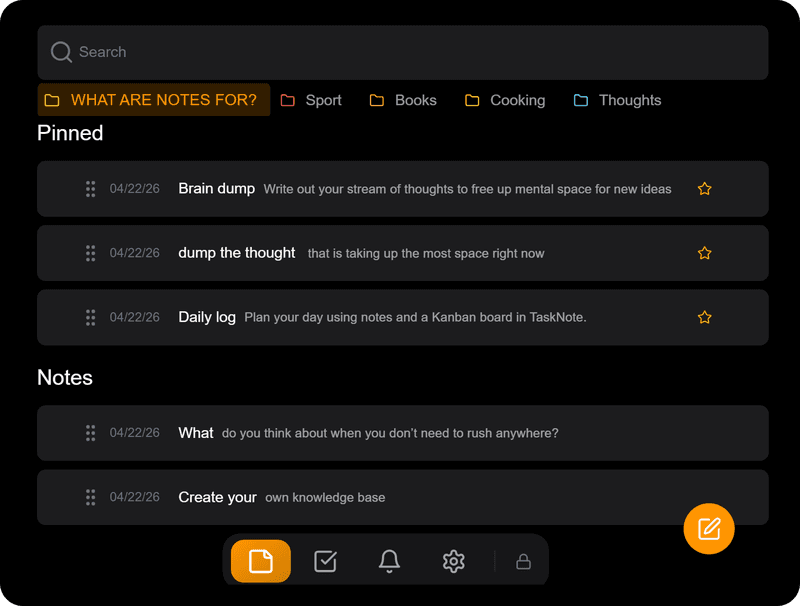
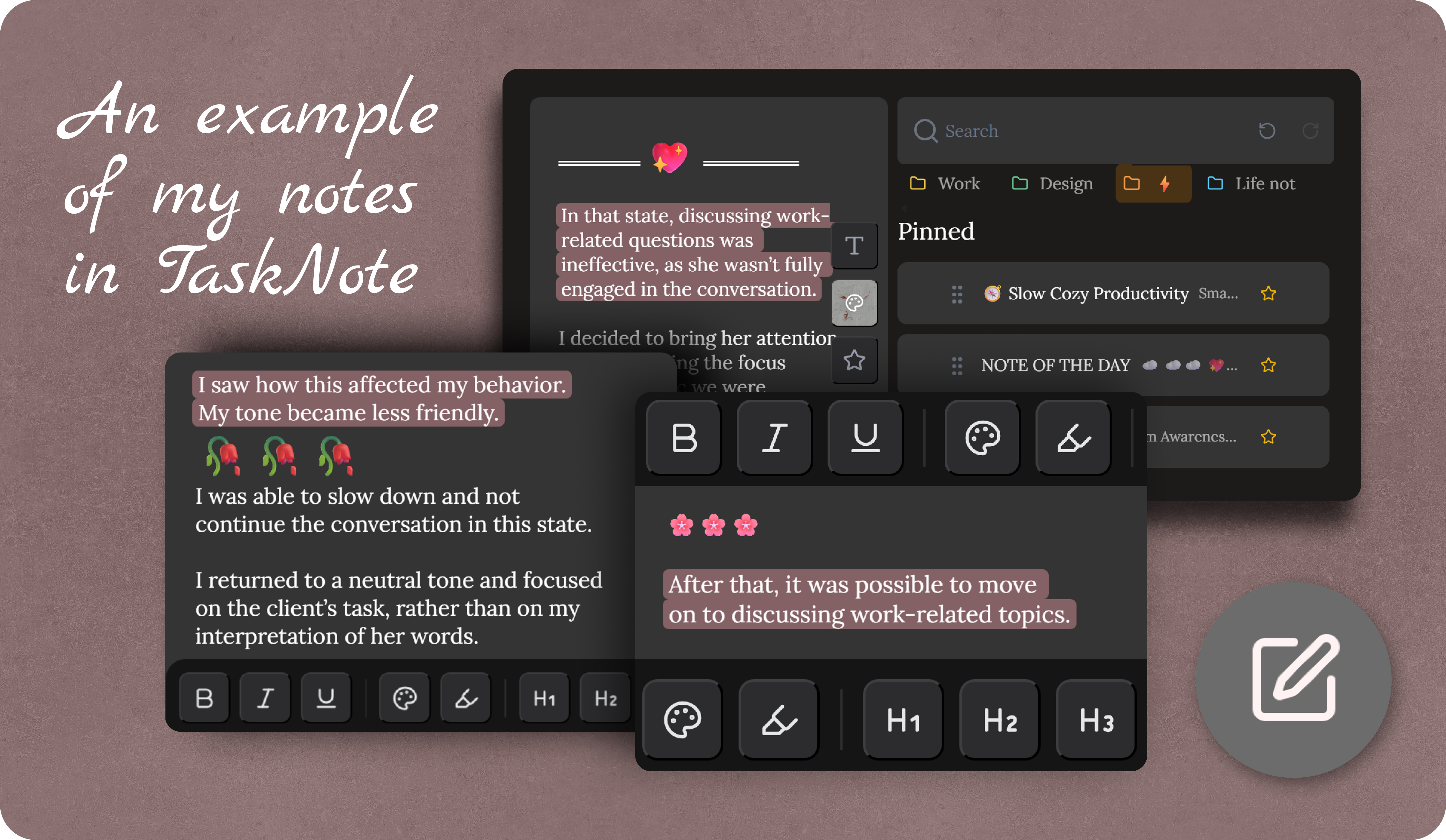
In my case, keeping digital notes helps most. It allows me to record emotional observations, see recurring patterns in my reactions, and return to theories or my own insights that interest me. This practice directly addresses how to improve EQ by making the invisible visible.
Frequently Asked Questions
- 1. Self-awareness
- 2. Self-regulation
- 3. Empathy
- 4. Social skills (effective communication)
- 5. Motivation
What's your EQ level?
Based on Goleman's model · ~2 min
Self-awareness
After a tense conversation, how quickly do you understand why you reacted the way you did?